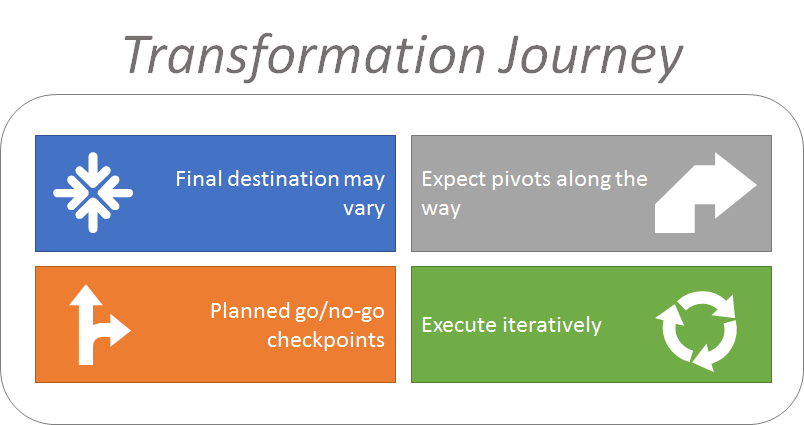
True transformations inherently involve substantial change, not the more common incremental change. Regardless of what type of transformation (e.g. digital, operational, financial, etc.) a company wishes to achieve, there are two common reasons why most such efforts fail:
- Insufficient or lacking change management, and
- Rigid mindset about final destination
Complicating matters, these two realities are actually compounding in effect – transformation brings great change, yet there is likely to be even more change than originally anticipated; and, change management is often perceived as bringing stability into an environment that is in flux. However, the truth is that both realities must be addressed, and can work together in a complementary manner.
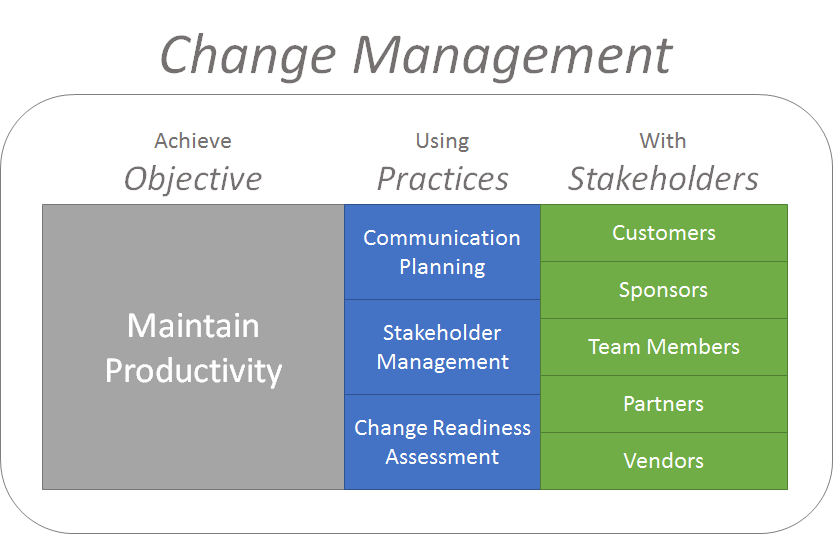
The primary objective of change management is actually not to bring stability, but rather to help ensure productivity is maintained while change is underway. In fact, effective change management exponentially increases in value the greater the change & the more dynamic the environment. Although it may sound challenging, the best change management boils down to a few core practices, that if deployed with vigor, can help any company navigate the many pitfalls associated with transformations.
The second major factor contributing to transformation failure is basically a belief that the outcome is predetermined or fixed – too risky to veer away from whatever the approved business case proposed. Logic does not often beat human nature, but in the case of transformation, this is even more evident… Without going into a philosophical debate, the bottom line for dealing with true transformations is the following – great change involves great uncertainty, which means the only safe assumption is that the final outcome is definitely going to change. So, with that fundamental truth in place, a much more pragmatic outlook for embarking on a transformational journey would be:
- Set expectations early that the final outcome is likely to change (at least somewhat)
- Several pivots along the way are inevitable, but will be vetted with the appropriate oversight committee
- Establish go/no-go checkpoints where open communication of real learnings rule the day
- Embrace iterative execution methods (transformations are too big for big-bang execution)